
Westward: From Abisko to Stetind
- Matthias

- Jan 14
- 4 min read
Updated: Feb 2

On the drive from Abisko toward the Norwegian border, I came across a small, almost hidden place right next to the road. A patchwork of shallow lakes, open tundra, and skeletal trees stretched across the landscape, easy to miss if you weren’t willing to slow down. I stopped without a plan, explored the area in the soft evening light, and decided to stay the night nearby in the camper van.

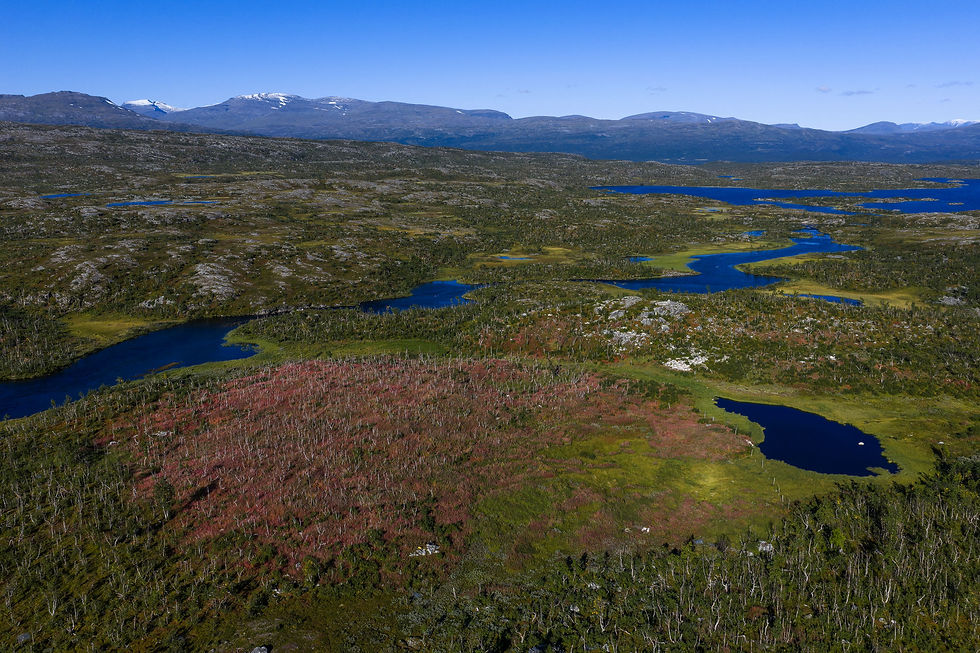
Early the next morning, I returned with a very different intention. Rather than photographing the wider landscape, I focused on details. Using the Sigma 500mm F5.6 DG DN OS | Sports, I isolated fragments of the scene. Dead birch trunks, twisted and bleached by time and weather, stood scattered across the tundra. With the long focal length, I could compress the space and separate individual trees from the surrounding chaos, turning them into quiet, almost graphic elements within the frame.

What initially felt like a place defined by openness slowly revealed a fragile balance. The dead trees weren’t random. They were part of a slow, ongoing process shaped by climate, soil, and exposure. Standing there in the still morning air, it became clear that this landscape exists in a constant state of transition. Nothing here is permanent. Growth and decay sit side by side, shaped by conditions that change subtly but relentlessly over time.

It was an unplanned stop, but one that stayed with me. A reminder that some of the most meaningful moments on a journey happen between destinations, when the road briefly asks you to pause and look closer.

Passing the border sign, the transition into Norway felt quiet and almost understated. No dramatic change announced itself immediately, yet within just a few kilometers the landscape began to shift. The open plateaus of northern Sweden slowly gave way to tighter forms. Mountains moved closer to the road, rock faces became steeper, and water appeared everywhere, flowing beside the asphalt, collecting in narrow lakes, or dropping down slopes in thin, fast-moving lines.
West of the border, the landscape began to tighten. Valleys narrowed, the air felt sharper, and the influence of the coast became noticeable. Norway replaced Abisko’s open distances with depth and compression, a landscape that no longer unfolded slowly but pressed in closer with every kilometer. Beyond Narvik, the road led directly toward Stetind. The mountain revealed itself gradually, first in fragments, then with growing clarity. Just before reaching it, the road disappears into the tunnel beneath the mountain, briefly reducing the landscape to darkness and motion, before opening again with Stetind suddenly present and unavoidable.
Emerging after 2.7km from the Stetindtunnelen, the road bends gently, and a simple left turn leads directly into the small parking area at the foot of Stetind. Suddenly, everything opens up. The mountain rises immediately above, while the fjord lies just ahead, calm and reflective. After the darkness of the tunnel, the contrast felt almost abrupt: rock, water, and space meeting in one quiet moment that marked my arrival more clearly than any sign ever could.


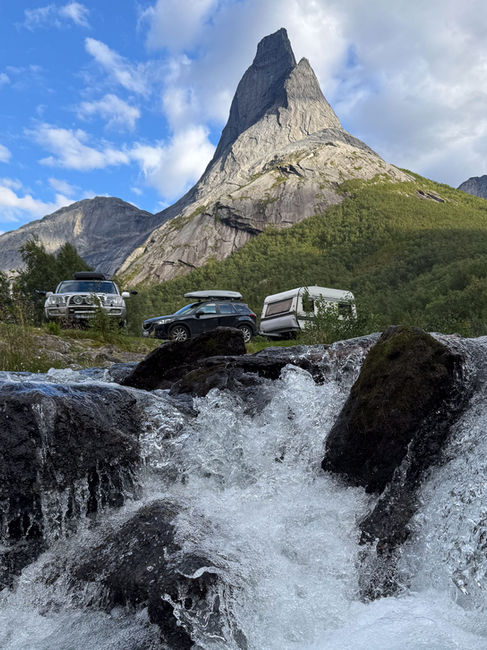
After parking the car, I went out to scout the area for possible compositions. I was prepared to get close, rubber boots on, stepping into the small creek that runs through the valley. From there, the view toward Stetind felt almost archetypal: water in the foreground, rock and forest rising behind it, the mountain anchoring everything. But the reality was less ideal. Parked cars and a camping trailer sat directly in the frame, breaking the visual flow. What I had imagined as a quiet, iconic scene turned into a reminder that even in places like this, timing and circumstance matter as much as preparation.

Continuing to scout, I crossed the road and walked down toward the fjord. Still wearing my rubber boots, I stepped into the cold water and let the moment slow down again. From there, the view shifted. The foreground simplified, the distractions fell away, and the relationship between water, shoreline, and mountain began to settle into something that felt balanced. It wasn’t the composition I had initially imagined, but it was good enough. And sometimes, that’s exactly what the landscape offers: not perfection, but a place to pause and work with what is there.

At this point, I thought the light had already peaked for the evening. I was just about to pack my gear and head back to the camper van for dinner when the first warm tones appeared on the lower flanks of Stetind.


Slowly, almost hesitantly, the alpenglow began to creep across the rock. Within minutes, the mountain transformed completely, the soft reds and oranges spreading upward until the entire face seemed to glow from within. What had felt like a quiet ending suddenly turned into the most intense moment of the day.
With Stetind slowly fading into the evening light, the journey was far from over. The road ahead would lead me further north, across fjords and mountains, toward the Lyngen Alps, a new landscape, new light, and the next chapter of this journey.

Stay tuned!


Comments