
Senja - Part I - Segla
- Matthias

- Jan 31
- 4 min read
Updated: Feb 2
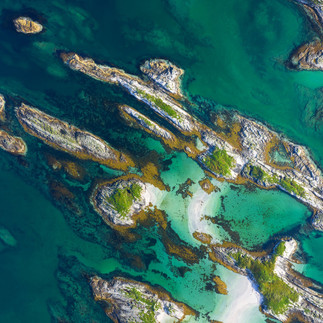
Before finally heading to Senja, I spent two days in and around Sommarøy, a small fishing village spread across a cluster of low-lying islands connected by bridges. The waters surrounding the village are dotted with countless small islands, creating a fragmented, almost playful coastline. What surprised me most was the colour of the sea. In calm moments, it shifted into shades of turquoise and light blue that felt more reminiscent of the Caribbean than the far north.

After the alpine terrain of Lyngen, this coastal landscape felt almost unreal. Here, the horizon opened horizontally rather than vertically, and light became the dominant element. Time slowed noticeably. I explored the shoreline without urgency, watched weather drift in from the open sea, and allowed the journey to pause once more. Sommarøy became a quiet transition point and a place to let the impressions of the road settle before moving on.


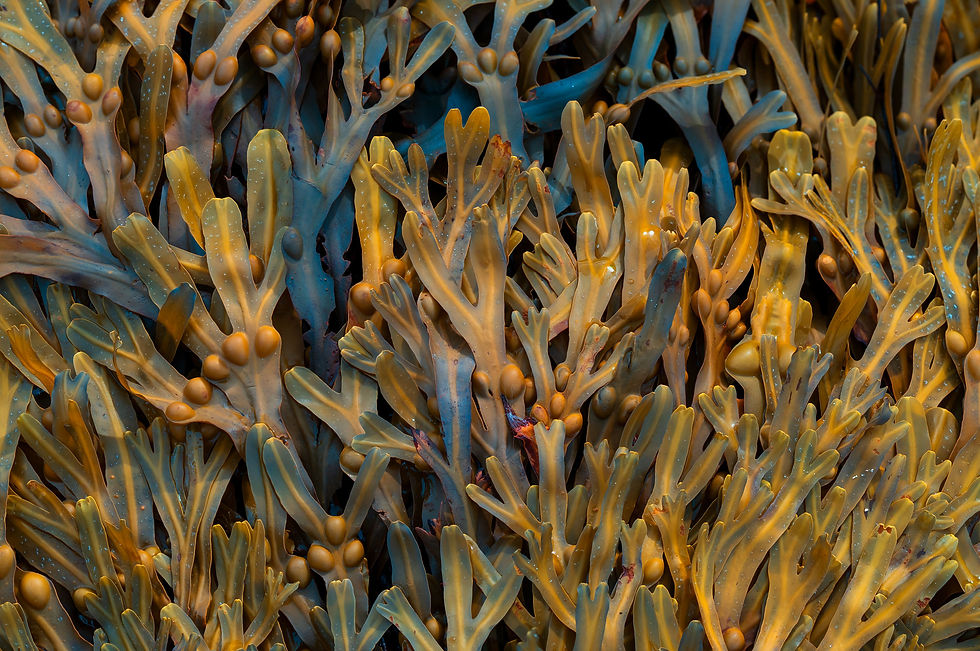
Before continuing on to Senja, I found myself waiting nearly six hours for the next ferry. A few short conversations with fellow travellers made it clear why. They advised me to arrive at the ferry port at least three hours early. It was the only crossing of the day, and missing it was not an option. With time to spare, I settled into a slower rhythm. Along the shoreline, I focused on small details: seaweed, textures, and subtle colour transitions, working with macro compositions shaped by tide and light. Back in the van, I began editing the images right away, coffee nearby, doors open, the landscape quietly present outside.

By the time I finally drove toward the small ferry port near Sommarøy, the waiting had softened into conversations, coffee, and a sense of shared anticipation.

Arriving on Senja, I hurried north toward the small village of Fjordgård, where the trail to Hesten begins. The plan was to hike up for sunset and photograph Segla from the opposing ridge. The route is relatively short, roughly a 3.5 kilometres round trip but it climbs steeply from sea level, gaining about 500 metres in elevation in a short distance.


As I started the ascent, the weather began to shift noticeably. Clouds thickened, the light flattened, and a quick look at the forecast showed rain clouds moving in. It was clear that conditions were deteriorating, but I decided to continue nonetheless. Sometimes it feels important to try, even when the odds are no longer ideal. As I climbed higher, wind picked up and contrast slowly drained from the landscape. In the end, rain set in before any meaningful light could develop, and I turned around, accepting that this was not going to be the evening I had hoped for.

During the following hours, heavy rain moved through the area. Despite the conditions, I decided to try again at sunrise if the weather showed even a small improvement. At 3:00 AM, I started the climb once more, retracing the steep path toward Hesten with cautious optimism.
The mountain was still wrapped in darkness, and the landscape felt unfamiliar in the half-light. As I climbed higher, strange sounds echoed from the slopes around me. At first, I was convinced I was hearing foxes. Their calls sounding almost like rough, mocking laughter somewhere in the dark. It took a moment to realise it was only ptarmigan, unseen but close. Once the surprise faded, the sounds became almost reassuring. A reminder that the mountain was already awake, long before I arrived with my hopes for good light.

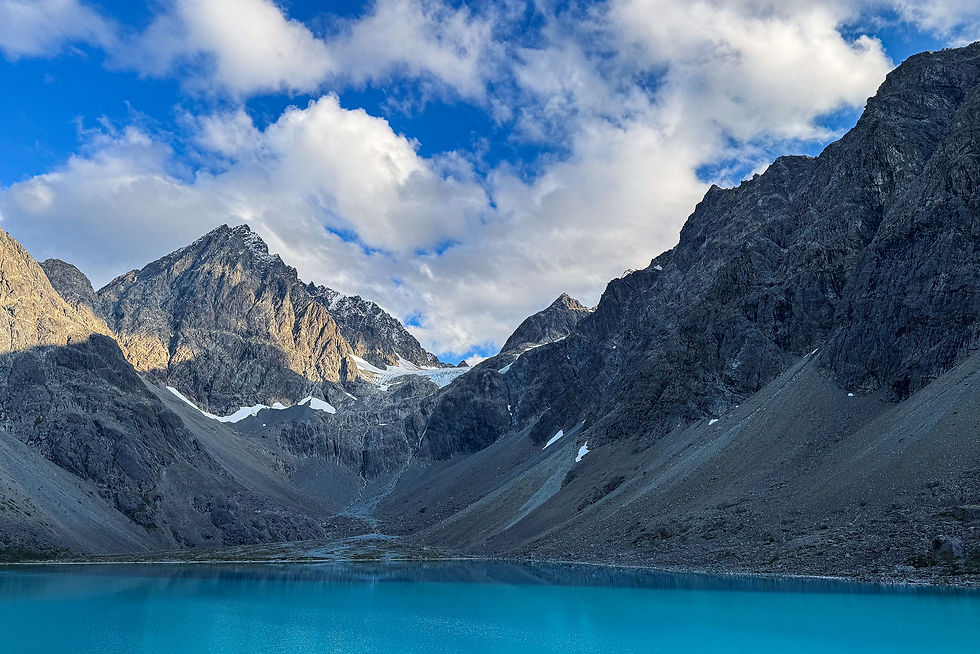
As the first light finally began to reach the ridge, everything changed quickly. Clouds that had felt heavy hours earlier thinned just enough to let the sun break through at the horizon. For a brief moment, no more than two or three minutes, the face of Segla caught the light. What followed felt almost unreal. A sudden, intense alpenglow spread across the rock, turning the mountain warm and luminous against the still-dark surroundings.

I wasn’t prepared for it. Not after the rain, the uncertainty, and the long hours of waiting. And just as quickly as it appeared, it faded again. The light softened, the colour drained away, and the landscape returned to its muted tones. But that short window was enough. A reminder that some of the most powerful moments in the mountains don’t linger. They arrive briefly, demand full attention, and disappear before you’ve had time to question them.


For these sunrise images of Segla, I was using the Sigma 20mm f/1.4 DG DN Art lens, a favourite for expansive landscapes and low-light conditions. The panoramic view at the top of the ridge was stitched from ten vertical exposures, allowing me to capture both the sweeping scene and a high level of detail in the foreground rocks and distant peaks. Shooting vertically and stitching in post gave me the combination of breadth and depth I was hoping for, especially in the fleeting minutes when the first light kissed the rock faces. Because the alpenglow lasted only briefly, there was no time to rethink composition. I worked quickly, balancing the wide scene with careful framing, knowing that every second mattered.


The descent back to the trailhead felt quiet and unspectacular, with clouds slowly creeping in and softening the landscape once more.


For the next few days, I continued to explore the island, following quiet roads and changing light. More moments from Senja, and the next part of the journey, will follow soon.


Comments